Rope and Demolish
- 3.2
- Rating
- 10.00M
- Installs
- Free
- Price

 Analysis by App-foxy
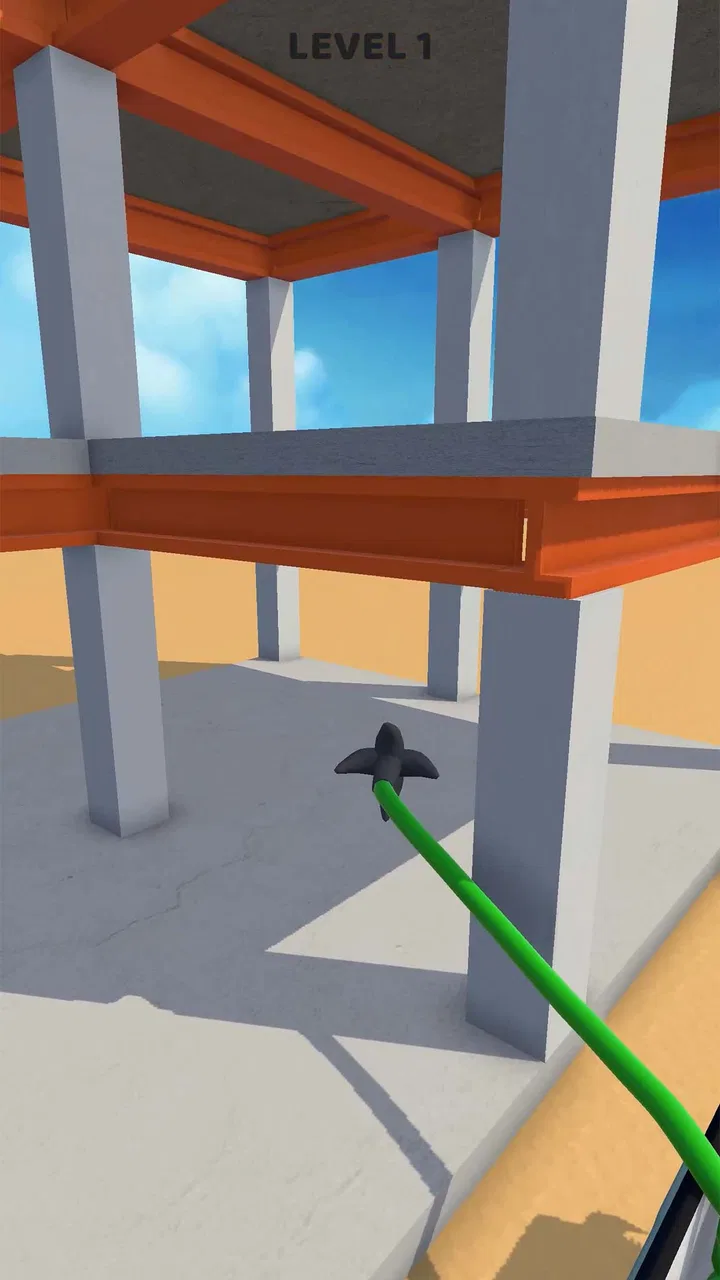
Rope Demolish is the kind of mobile simulation game I open when I want a quick, uncomplicated distraction. Its central idea is easy to understand: use ropes and demolition mechanics to bring structures down, then enjoy the satisfying result. That simplicity is the main attraction, but it also creates the question that matters more than the first few minutes: does the game still deserve a place on your phone after the novelty wears off?
After spending time with it, my answer is mixed but fairly clear. I enjoyed the short bursts of destruction, especially when I wanted something that did not require a long tutorial, a complicated strategy or a serious time commitment. At the same time, the experience is built around a narrow loop, so its long-term value depends heavily on how much you enjoy repeating a familiar action. I would recommend it as a casual break rather than as a deep simulation game.
Why the first sessions feel so satisfying
The appeal is immediate because the game does not ask me to learn a complicated control scheme before I can have fun. I can get into a level, focus on the rope-based demolition task and watch the structure react. That direct connection between an input and a visible collapse gives the game its best moment: I make a decision, the building responds, and the result feels tangible even though the whole experience is virtual.
You May Also Like

 Blood Strike: 2.5 Anniversary
Blood Strike’s Loadouts Turn Every Drop Into a Tactical Gamble
A close look at Blood Strike’s custom loadouts: how fast access to signature weapons reshapes its battle royale rhythm, rewards preparation, and narrows the gap between fights.

 Pandora - Music & Podcasts
Pandora’s Music Is Easy to Start, but Harder to Recover
Pandora’s strength is its low-effort path from a seed to a station. Its weak spot is how much confidence it asks you to place in connection, setup, and quiet recovery.

 8 Ball Pool
 Is Built on Rivalries, Rematches, and Routine
A close look at the rivalries, rematches, shared routines, and unanswered safety questions that turn a quick pool match into a persistent mobile community.

 Samsung Music
’s Quiet Strength Is Playing What You Already Own
Its reach comes less from spectacle than from dependable access to a personal library. That simplicity is both the app’s strongest retention engine and its ceiling.

 AccuWeather: Weather Radar
AccuWeather Review: A Quick, Clear Forecast for Everyday Decisions
For everyday plans, the best forecast is the one you can understand quickly. AccuWeather makes rain timing, radar, and local conditions easy to act on, with a few trade-offs.

 Hill Climb Racing
Why Hill Climb Racing Still Turns Crashes Into One More Run
A tiny car, a bumpy hill and one more upgrade: Hill Climb Racing keeps resurfacing because its simple chaos makes every near-miss feel personal.
More From Our News Desk



That makes it a good fit for short sessions. I can play while waiting for an appointment, during a brief break or when I have only a few minutes before doing something else. There is no need to remember a large story, manage a team or prepare a long-term plan before starting. The game is comfortable in those small gaps of the day when a more demanding title would feel like work.
The presentation also benefits from restraint. Rope Demolish is not trying to turn demolition into a complex engineering course. Instead, it focuses on the pleasure of setting up a collapse and seeing whether the result matches what I expected. That keeps the first sessions approachable for people who do not normally play simulation games. Someone looking for a relaxing, physical-feeling interaction may understand the attraction within minutes.
Still, I would not confuse accessibility with depth. The game gives me a straightforward activity, not a detailed construction sandbox. If you are expecting realistic structural calculations, extensive building tools or a campaign with a strong narrative, this is probably not the right choice. Its simulation label describes the demolition theme, but the experience is closer to a casual physics toy than a serious simulator.
What I learned by experimenting with the ropes
The most useful way to play is not to rush every attempt. I found that taking a moment to inspect the structure before acting makes the result more interesting. The rope placement is not merely a visual step; it is where I decide how much of the collapse I want to influence. Even when the available interaction is simple, testing different approaches gives the game more life than repeating the same gesture without thinking.
A small but important tip is to treat failed attempts as information rather than wasted turns. When a collapse does not happen as expected, I can look at which section moved first and adjust the next setup. This turns a basic level into a compact problem-solving exercise. It is not deep enough to replace a full puzzle game, but it does reward a little patience.
I also prefer playing with a specific short-session goal. For example, I might decide to try a few levels while waiting for dinner or use the game as a reset between more demanding tasks. That approach keeps the satisfying part intact and prevents me from expecting the game to provide hours of variety at once. In my experience, the title works best when I control the length of the session instead of letting the repetitive loop continue indefinitely.
The game comes from VOODOO, a developer familiar with compact mobile experiences designed around one easily understood interaction. That background is noticeable in the way Rope Demolish gets to its main idea quickly. The benefit is a low barrier to entry; the trade-off is that players who want layered progression may feel the limits sooner than players who simply want a quick distraction.
How it compares with other casual simulation choices
Compared with a management simulation, this game asks for far less commitment. I am not balancing budgets, scheduling workers or maintaining a growing system. That makes Rope Demolish easier to pick up, but it also means there is less reason to return for a long strategic plan. A management title can create ongoing goals through upgrades and decisions; here, the immediate demolition moment carries most of the entertainment.
Compared with a physics puzzle game, Rope Demolish feels more relaxed and less demanding. A dedicated puzzle game may require careful planning across many interacting objects, while this experience puts more emphasis on the pleasure of the collapse itself. If you enjoy finding one exact solution, another option may keep you engaged longer. If you enjoy experimenting without wanting a difficult brainteaser, this game is more welcoming.
It also differs from destruction games that offer large environments or extensive creative tools. Rope Demolish gives me a focused interaction rather than a broad playground. That focus is useful on a phone because it keeps the controls simple, but it limits the number of ways I can express creativity. I would choose it for a quick tactile break, not for building elaborate demolition scenarios.
What remains after the novelty fades
During the first week, the main question is how satisfying the rope setup and collapse feel. After that initial curiosity, the more important question becomes whether each new session offers a meaningful variation. For me, the answer depends on my mood. When I want a few minutes of uncomplicated action, the game remains pleasant. When I want a stronger sense of progress, I start noticing the narrowness of the loop.
The title has reached over ten million installs, which shows that its simple concept has broad appeal. Its average rating is 3.3 from around twenty-nine thousand ratings, a combination that suggests a divided audience rather than universal enthusiasm. That matches my own impression: the game can be enjoyable when its modest scope is exactly what I want, but disappointing if I expect a substantial simulation experience.
Its free price makes trying it easy. I do not need to make a commitment before finding out whether the demolition interaction suits me. There are in-app purchases priced at $2.99 per item, so I would approach optional spending carefully. The basic appeal should be clear before paying for anything. In a game whose strongest feature is a repeated short interaction, extra purchases are only worthwhile if they genuinely improve the way I play rather than simply encouraging me to continue a loop I already find tiring.
For month-to-month value, I would place it below games with evolving challenges, deeper progression or a wider range of activities. Rope Demolish can remain useful as a small installed time-filler, but I would not expect it to become a daily habit for every player. Its recurring value comes from convenience and mood, not from a rich sequence of goals that keeps unfolding over time.
Who is most likely to keep playing
The best audience is someone who enjoys casual simulation games, simple physics interactions and short sessions. If you like watching a plan produce a visible result, the game has an appealing rhythm. It can also work for younger players and families because it carries an Everyone content rating and does not require the kind of sustained concentration associated with more complex strategy games.
I would also recommend it to people who often abandon mobile games because they are overloaded with systems. Rope Demolish is much easier to understand than a title that begins with several currencies, menus and tutorials. You can see the point of the game quickly, which is valuable when your phone is mainly a tool for filling small moments.
On the other hand, I would tell competitive players to look elsewhere. There is no reason to expect the same pressure as a ranked game, and the demolition loop is not designed around mastering an opponent. Players who need a strong story, character development or a large world may also lose interest quickly. The game is not failing when it lacks those elements; they simply are not what this particular experience is built to provide.
It is also a poor match for anyone who dislikes repetition. The central action is the reason to install the game, but it is also the source of its biggest limitation. If repeating a related setup and collapse begins to feel like a chore, there may not be enough variety to pull you back. I would rather be honest about that than suggest that a simple concept automatically becomes deep through extended play.
Keeping the experience enjoyable instead of tiring
One practical way to reduce fatigue is to stop after a satisfying result rather than playing until the interaction feels stale. This sounds obvious, but it matters more in a game with short, self-contained moments. Ending a session after a good demolition leaves me with a positive impression, while pushing through several similar attempts can make the whole game feel flatter than it really is.
I also recommend alternating it with a different type of app or game. Rope Demolish works well as a palate cleanser between reading, work or a more demanding game. It is less effective when I expect it to occupy the entire evening. That distinction helps preserve its strongest quality: it is easy to start and easy to leave.
Another useful habit is to play deliberately rather than tapping through automatically. Look at the structure, consider where the tension may matter and use each attempt to test an idea. This adds a small layer of personal challenge without pretending that the game has a complex hidden strategy system. The result is a better experience because I am engaging with the interaction instead of merely waiting for the next collapse.
Maintenance is not a major burden in the usual sense. The current version is 96, and the game supports devices running Android 8.0 or later, so compatibility is reasonably broad for many Android users. From a player’s perspective, though, the real maintenance issue is attention: the game needs occasional self-imposed limits to avoid becoming repetitive. I do not need to organize a large collection or maintain a complicated in-game routine, but I do need to manage my expectations.
Where the friction becomes noticeable
The first source of fatigue is predictability. Once I understand the basic relationship between the rope setup and the collapse, some of the surprise disappears. The experience can still be satisfying, but the emotional impact is strongest early on. A player who needs constant novelty may feel that the game reaches its natural limit faster than expected.
The second issue is the gap between the word “simulation” and what many people imagine that category means. Rope Demolish presents a simplified version of demolition, not a detailed professional model. That is perfectly suitable for casual play, but it is worth knowing before downloading. If you want precision, construction planning or realistic consequences, a more specialized simulation would be a better investment of your time.
There is also a possible friction around spending. Because the game is free to start and offers items at $2.99 each, I would avoid buying anything until I had already played enough to know that the core loop has lasting appeal. A purchase cannot solve a lack of interest in the basic activity. For me, the sensible approach is to treat optional spending as a convenience decision, not as a requirement for discovering whether the game is enjoyable.
Finally, the game is not ideal when I want a strong sense of accomplishment. A demolition can look and feel rewarding in the moment, but that is different from completing a long campaign or developing a skill that transfers across a large set of challenges. This is a game for immediate feedback, not necessarily for a lasting personal achievement.
My long-term recommendation
After the first-week appeal fades, Rope Demolish earns a limited but legitimate place on my phone. I see it as a reliable casual option for short breaks, especially when I want a physical-feeling interaction without learning a complex system. Its free entry point, accessible controls and clear demolition theme make it easy to recommend to the right person.
I would not call it a must-have simulation game, and I would not install it expecting months of deep progression. Its value is more modest: a quick, understandable activity that can provide a few satisfying moments when I do not want anything demanding. That is enough for some players, but not for everyone.
My advice is to judge it by the quality of its short sessions, not by the promise of endless variety. Try it if you enjoy casual destruction and simple experimentation. Skip it if you need a detailed simulator, a competitive challenge or a constantly expanding set of goals. For me, the game works best as an occasional tool for resetting my attention, and that is where its lasting value ends.
With its Everyone rating, broad Android compatibility and free starting point, it is easy to test without much risk. Just keep the expectations realistic, play in short bursts and think twice before spending on individual items. Used that way, Rope Demolish remains a pleasant little diversion from VOODOO rather than a game I would keep returning to for a deep, long-term journey.
FAQs for Rope and Demolish
01What is the main objective of Rope and Demolish?
Rope and Demolish is a physics-based puzzle game where the primary goal is to strategically use ropes to demolish structures. Players must carefully plan and execute their moves to bring down buildings using the least amount of resources. This requires critical thinking and creativity to solve each level efficiently.
02Is Rope and Demolish suitable for all ages?
Yes, Rope and Demolish is designed to be family-friendly and can be enjoyed by players of all ages. Its intuitive controls and engaging gameplay make it accessible for children, while the increasing difficulty levels provide a challenge for adults. However, parental guidance is recommended for younger players to help with complex puzzles.
03Does Rope and Demolish require an internet connection to play?
Rope and Demolish does not require an internet connection for the majority of its features. Players can enjoy the game offline, making it a great option for on-the-go entertainment. However, certain features, like leaderboards or cloud saving, may need an internet connection to function properly.
04Are there in-app purchases in Rope and Demolish?
Yes, Rope and Demolish offers in-app purchases. These can include additional levels, special tools, or cosmetic upgrades to enhance the gaming experience. While the core game is free to play, purchasing items can provide advantages or enhance enjoyment, though they are not necessary to complete the game.
05What platforms are supported by Rope and Demolish?
Rope and Demolish is available on both Android and iOS platforms, ensuring a wide range of device compatibility. Players can download it from the Google Play Store for Android devices and the Apple App Store for iOS devices, making it easily accessible for most smartphone and tablet users.
Pros
- Intuitive controls make gameplay easy.
- Visually satisfying demolition effects.
- Challenging levels increase engagement.
- Minimal ads enhance user experience.
- Offline mode available for travel.
Cons
- Limited level variety over time.
- Occasional lag on older devices.
- In-app purchases can be pricey.
- Repetitive sound effects can annoy.
- No multiplayer mode available.

Rope and Demolish
Gallery